


Are Leather Dog Collars Good for Everyday Use?


Last Updated: November 10, 2026
Quick Summary
A leather dog collar suits everyday use because it balances strength, comfort and appearance better than most synthetic straps. Choose full-grain leather rather than bonded or split leather, since full-grain survives years of daily walks.
- Full-grain leather, with its outer grain intact, is the grade that survives years of daily use.
- Bonded leather crumbles and cheap split leather cracks at the buckle.
- Measure the widest part of the neck, average a snug and a loose reading, then add about two fingers of slack.
- Match collar width to neck size, roughly one-tenth of the neck circumference, going narrower for sighthounds and toy breeds.
- After wet walks, air dry the collar slowly and condition it every three to six months.
Table of Contents
- Why a Leather Dog Collar Works for Everyday Wear
- Best Leather Dog Collars for Daily Walks: Quick Comparison
- What a Full-Grain Leather Dog Collar Means for Durability
- How to Measure a Dog Collar for a Comfortable Fit
- Choosing a Leather Dog Collar for Large Dogs and Strong Pullers
- How to Care for a Leather Dog Collar in Wet Weather and Daily Use
- Find Your Dog's Everyday Collar at The Africa House
- Frequently Asked Questions
Why a Leather Dog Collar Works for Everyday Wear
A leather dog collar is the practical choice for daily walks because it balances strength, comfort and looks in a way synthetic straps rarely manage. At The Africa House, our collars are made from hard-wearing Kenyan free-range beef leather, hand-beaded and hand-stitched.
Leather is a practical material for daily walks, and natural leather is a breathable option against the neck compared with some synthetic materials.
What most guides miss is that "leather" covers a wide range. Bonded leather crumbles; cheap split leather cracks at the buckle. Full-grain leather, the top layer of the hide with its grain intact, is the grade that survives years of daily use. That distinction matters more than any brand name. Choosing full-grain over bonded or split leather is the key distinction, and a leather grade guide for everyday use can help keep that choice clear.
If you want the deeper reasoning behind the material, our guide on whether leather collars are good for dogs covers suitability, sensitivities and everyday wear in more detail.
Best Leather Dog Collars for Daily Walks: Quick Comparison
Here is how our everyday range compares on price, width and build. Every collar is made in Kenya by Zinj Design, hand-beaded with 100% glass beads, and finished with solid brass hardware cast from recycled brass.
Collar |
Price |
Padding |
Best for |
|---|---|---|---|
"ZigZag" Luxury Tan |
£28.00 |
Extra-wide goatskin over foam |
Dogs needing max comfort |
"Swahili" Luxury Tan |
£28.00 |
Extra-wide goatskin over foam |
Everyday walks, tan finish |
"Bushman" |
£20.00 |
Soft goatskin lining |
Value pick, all sizes |
"Pokot Red" |
£20.00 |
Soft goatskin lining |
Bold colour, daily use |
"Maasai" |
£20.00 |
Soft goatskin lining |
Large and XL dogs |
Price
The luxury pair include an extra-wide goatskin cover folded around a foam interior for additional comfort. The standard line is priced £8 less and has a goatskin lining.
Best for: most owners who want one collar for walks, training and the garden. Skip if: your dog swims in the sea weekly, in which case rinse and condition more often.
What a Full-Grain Leather Dog Collar Means for Durability
A full-grain leather dog collar uses the outermost layer of the hide, the grain layer of natural leather.
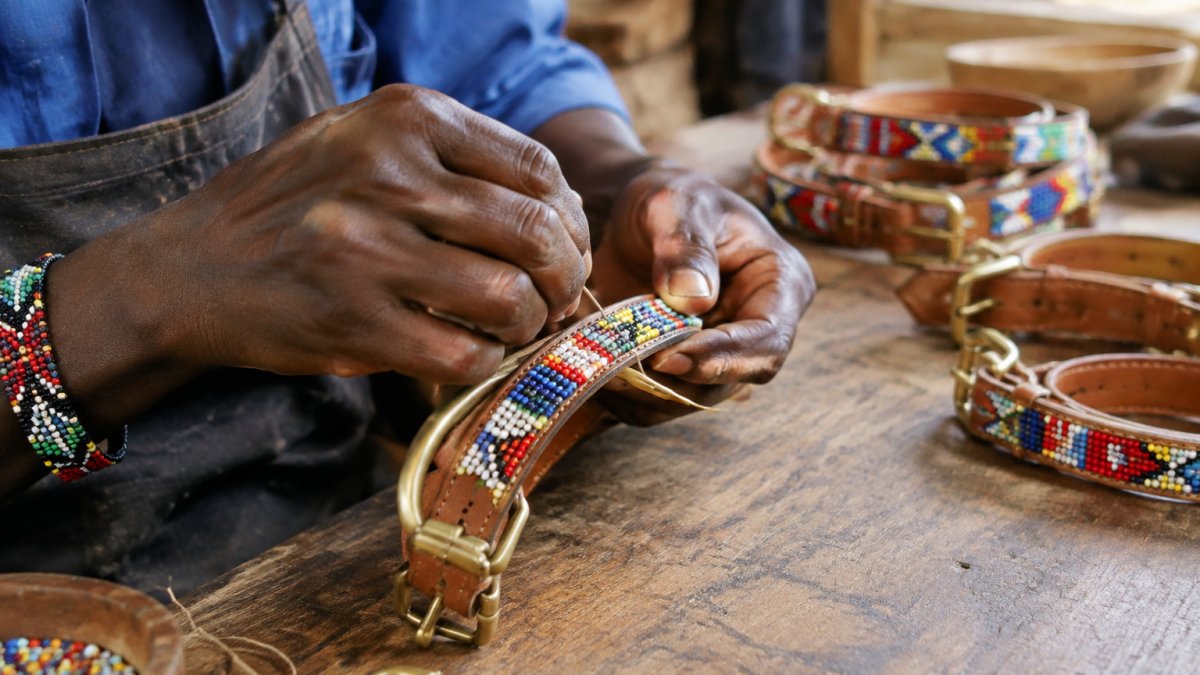
Our collars are hand-beaded with 100% glass beads and hand-stitched to make them strong and long-lasting. The sturdy, solid brass hardware is hand cast by local artisans using recycled brass.
If durability is your main question, our piece on how durable beaded leather dog collars really are goes deeper into stitching, hardware and expected wear.
How to Measure a Dog Collar for a Comfortable Fit
To measure for a dog collar, wrap a soft tape around the widest part of your dog's neck, where the collar naturally sits, and note the measurement in centimetres. Add roughly two fingers of slack so the finished collar is snug but not tight. That is the standard advice, but it leaves most owners guessing at the two numbers that actually determine comfort: collar width and the fit check after the collar arrives.
A more reliable method uses three measurements, not one. First, measure the neck at its widest point, usually just behind the ears and jaw, not at the base of the skull. Second, measure the same spot again with the tape pulled snug, then average the two readings. Third, measure the width of your dog's neck from the collar line to the top of the shoulder; this tells you how much strap the collar can sit on without rubbing the windpipe. For a Labrador-sized neck of around 45cm, a 4cm-wide collar spreads load well; for a Whippet or Italian Greyhound with a 28cm neck, a 2cm to 2.8cm strap is kinder because the neck is thin and the strap needs to sit without twisting.
Collar width should scale with neck size, not with breed alone. As a working rule, a collar width of roughly one-tenth of the neck circumference suits most dogs: a 30cm neck pairs with a 3cm collar, a 50cm neck with a 4cm collar. Go narrower for sighthounds and toy breeds, wider for strong pullers and giant breeds. The width matters because a narrow strap concentrates pressure on a small area of the neck, while an overly wide strap on a small dog can chafe the jaw and shoulder.
Once the collar arrives, check the fit with the two-finger test at the front of the neck and a flat-hand check at the back. You should be able to slide two fingers under the strap at the throat without forcing, and the collar should not rotate freely around the neck when the dog shakes. A collar that spins easily is too loose; one that leaves a red mark after ten minutes is too tight. Re-check after the first week, because leather softens and stretches slightly with wear, a collar that fits perfectly on day one may need the buckle moved one hole tighter after a fortnight.
Three steps keep it simple:
- Measure the neck at its widest point, not at the base of the skull, and average a snug and a loose reading.
- Match collar width to neck circumference, roughly one-tenth of the neck measurement, and adjust down for sighthounds and toy breeds.
- Re-check the fit after a week of wear, using the two-finger test at the throat and a flat-hand check at the back of the neck.
Collar listings on our site give dimensions for width. Check them before ordering. Once you know your dog's numbers, you can browse a bespoke large collar built to those measurements.
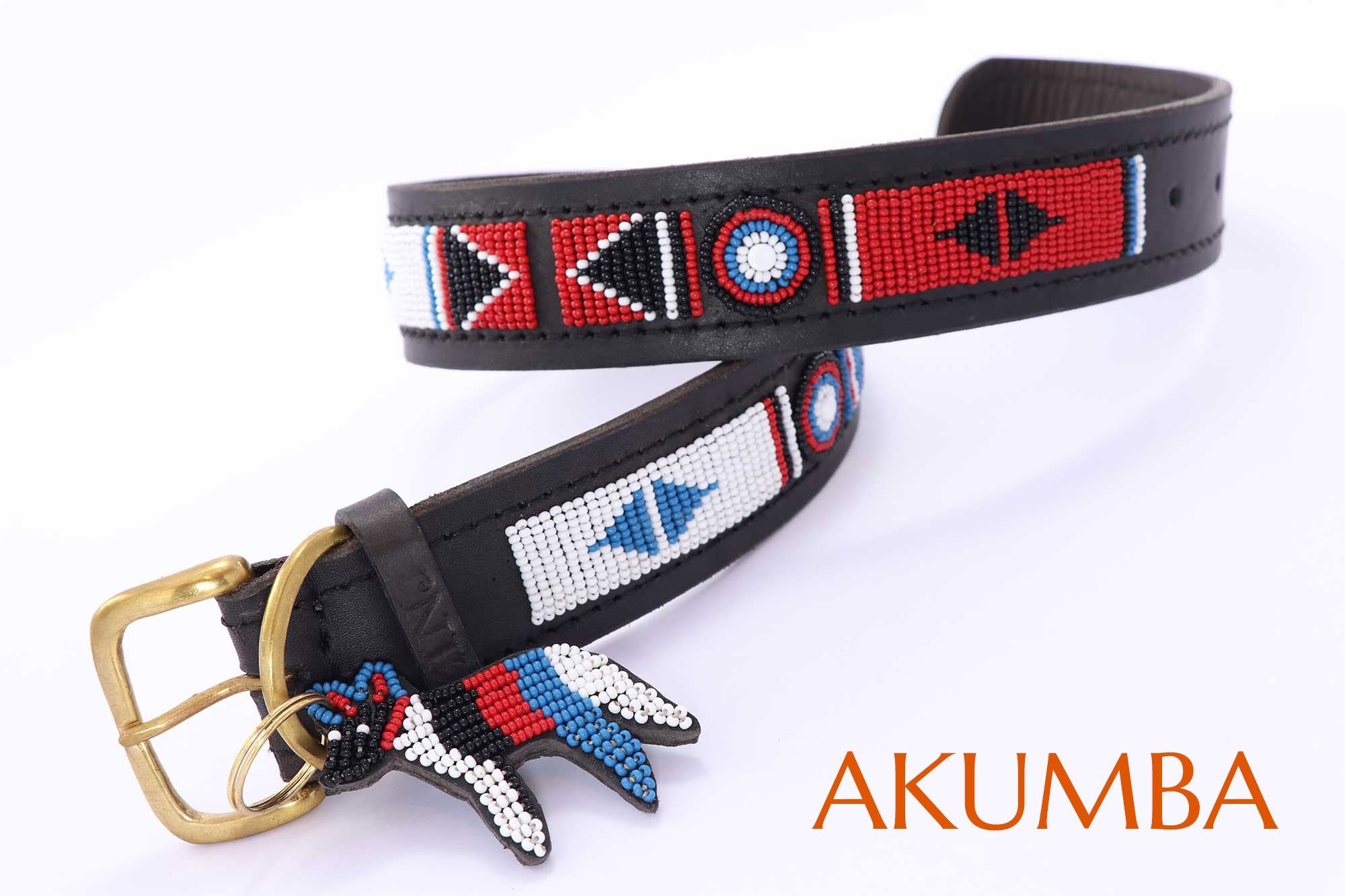
Measure the dog's neck rather than an old collar, which may have stretched.
Choosing a Leather Dog Collar for Large Dogs and Strong Pullers
For a large dog or a strong puller, prioritise width, hardware and stitching over decoration. A 4cm-wide collar spreads load across the neck far better than a 2cm strap, and cast brass fittings hold up where plated ones bend.
On our range, the Large and Extra Large sizes run to 4cm wide. The "ZigZag" and "Swahili" luxury collars include an extra-wide padded lining.
A few practical checks before you buy:
- Confirm the D-ring is welded or cast, not a bent wire loop.
- Look for stitching through the full strap, not just at the edges.
- Match collar width to neck size; too narrow concentrates pressure.
Best for: strong pullers and dogs over roughly 25kg. Skip if: your dog wears a head halter or harness for walks, where a lighter collar is enough.
You can browse the full large dog collar range.
How to Care for a Leather Dog Collar in Wet Weather and Daily Use
Leather handles occasional rain well; repeated soaking without care is what shortens its life. Wipe the collar with a damp cloth after a wet walk, let it dry naturally away from radiators, and condition the leather a few times a year. That is the short version. The longer version matters because most leather collars fail not from wear but from water and neglect, and the maintenance frequency should match the dog's routine rather than a calendar.
A simple care routine for a leather dog collar:
- After wet walks: blot dry with a towel, air dry flat, never over direct heat. If the collar is soaked through, stuff the strap with newspaper to hold its shape while it dries.
- Weekly in wet seasons: wipe with a barely damp cloth to lift mud and road salt, then dry fully before the next walk. In a British winter, that may mean every day for weeks.
- Monthly in dry weather: a quick wipe with a barely damp cloth is enough to lift dust and hair.
- Every three to six months: apply a thin layer of leather conditioner and buff off the excess. Neatsfoot oil or a beeswax-based conditioner suits most everyday collars; avoid silicone-based polishes, which sit on the surface and can darken the leather unevenly.
- Salt water: rinse with fresh water first, then dry and condition, as salt dries the hide and speeds cracking.
Take care: drying leather on a radiator or in a tumble dryer cracks it. Slow air drying is always the safer route, and a collar that has been soaked should be conditioned once fully dry, not while damp.
Brass hardware needs almost nothing beyond a wipe; it darkens with age, which most owners like. If you prefer bright brass, a cloth and a little lemon juice will lift the patina without harming the leather.
Find Your Dog's Everyday Collar at The Africa House
Choosing well comes down to three things: the right leather grade, an accurate neck measurement, and hardware that will not fail. Get those right and one collar can carry you through years of daily walks.
Our collars are fairly traded, handmade in Kenya by Zinj Design, and carry a lifetime guarantee. One customer who ordered the XL Bespoke Swahili collar for their Labrador, Dexter, praised the quick delivery, good packaging and clear communication throughout.
If you are ready to choose, browse our featured collection of everyday collars and pick the width and colour that suit your dog. Measure first, order once.
The gap between a collar that lasts a season and one that lasts a decade is rarely luck. It comes down to full-grain leather, cast brass and stitching done by hand. The Africa House builds all three into every collar, with a lifetime guarantee behind each one. Get started with The Africa House and give your dog a collar made to be worn every single day.
Frequently Asked Questions
Are leather dog collars comfortable for everyday use?
Yes, when the inside is soft and the fit is correct. The Africa House collars use a goatskin lining, and the luxury range adds an extra-wide goatskin cover over a foam interior. You should still be able to slide two fingers under the collar, and check the neck weekly on a growing or changing dog. A well-fitted leather dog collar softens with wear and becomes more comfortable over time.
How do I measure my dog for a leather collar?
Use a soft tape measure around the base of the neck, where the collar naturally sits, and keep it snug without tightening. If you do not have a tape, use a piece of string and measure it against a ruler. Add roughly two fingers of room for comfort. Check the exact dimensions listed on each collar before ordering, because widths range from 2cm on miniature and skinny styles up to 4cm on large and extra-large collars.
How long should a leather dog collar last?
The Africa House collars are made from Kenyan free-range beef leather, hand-beaded with 100% glass beads and hand-stitched, and every product carries a lifetime guarantee.
How do you clean and condition a leather dog collar?
Wipe the leather with a damp cloth and let it dry naturally away from direct heat.
Is full-grain leather better for a dog collar?
The Africa House uses natural Kenyan beef leather with hand-cast recycled brass hardware, and the beaded finish is hand-stitched.
